For decades, the concept of a Digital Twin—a real-time, virtual replica of a physical entity—has revolutionized manufacturing, engineering, and city planning. Now, this transformative technology is shifting its focus to the most complex system of all: the human body.
The rise of the Human Digital Twin (HDT) is not science fiction; it’s the next frontier in personalized health and performance. By merging continuous data streams from wearables, genomic information, and lifestyle logs with sophisticated AI models, the HDT promises to create a dynamic, personalized model of you, revolutionizing how we approach wellness, productivity, and longevity.
What is a Human Digital Twin (HDT)?
A Human Digital Twin is a dynamic, high-fidelity virtual model of an individual. It continuously synchronizes with its physical counterpart using real-time data from diverse sources:
-
Physiological Data: Heart rate, sleep stages, activity levels (from smartwatches, rings, and patches).
-
Molecular/Genomic Data: DNA, blood test results, gut microbiome analysis.
-
Behavioral Data: Diet logs, screen time, stress levels, environmental exposure.
Unlike a static medical record, the HDT is an active simulation environment. It’s designed to monitor your current state, predict future trends, and allow you to safely test “what if” scenarios for peak health and productivity.
Health: Moving from Reaction to Prediction
The most profound impact of the HDT will be the shift from reactive medicine (treating symptoms) to predictive wellness (preventing illness).
1. Precision Medicine and Drug Simulation
-
Virtual Clinical Trials: An HDT allows pharmaceutical researchers and your doctor to test the effects of a new drug, vaccine, or treatment plan on your virtual self first. This eliminates physical risk, predicts side effects with unprecedented accuracy, and allows for the precise, personalized dosing necessary for true precision medicine.
-
Early Disease Detection: By continuously monitoring subtle shifts in hundreds of biomarkers, an HDT’s AI can detect patterns indicative of disease (e.g., cancer, diabetes, Alzheimer’s) weeks or months before a human or standard diagnostic test would raise an alarm. It shifts the intervention window to the earliest, most treatable stage.
2. Personalized Nutritional and Fitness Regimens
Forget generic meal plans. An HDT understands your unique metabolic profile.
-
Metabolic Simulation: The twin can simulate how your body will respond to specific foods, exercise intensities, and even sleep deprivation. It might predict that $X$ amount of complex carbohydrates eaten at 7 PM will maximize your running performance the next morning, or that a specific supplement will address a subtle nutrient deficiency flagged by your data.
-
Fatigue and Recovery Modeling: Athletes are using organ-level twins to model muscle fatigue, recovery times, and injury risk, allowing them to optimize training load and maximize performance gains while minimizing the chance of an acute injury.
Productivity: Optimizing the Cognitive Engine
The HDT doesn’t just focus on the physical; it also models your cognitive state, ushering in an era of Precision Productivity.
-
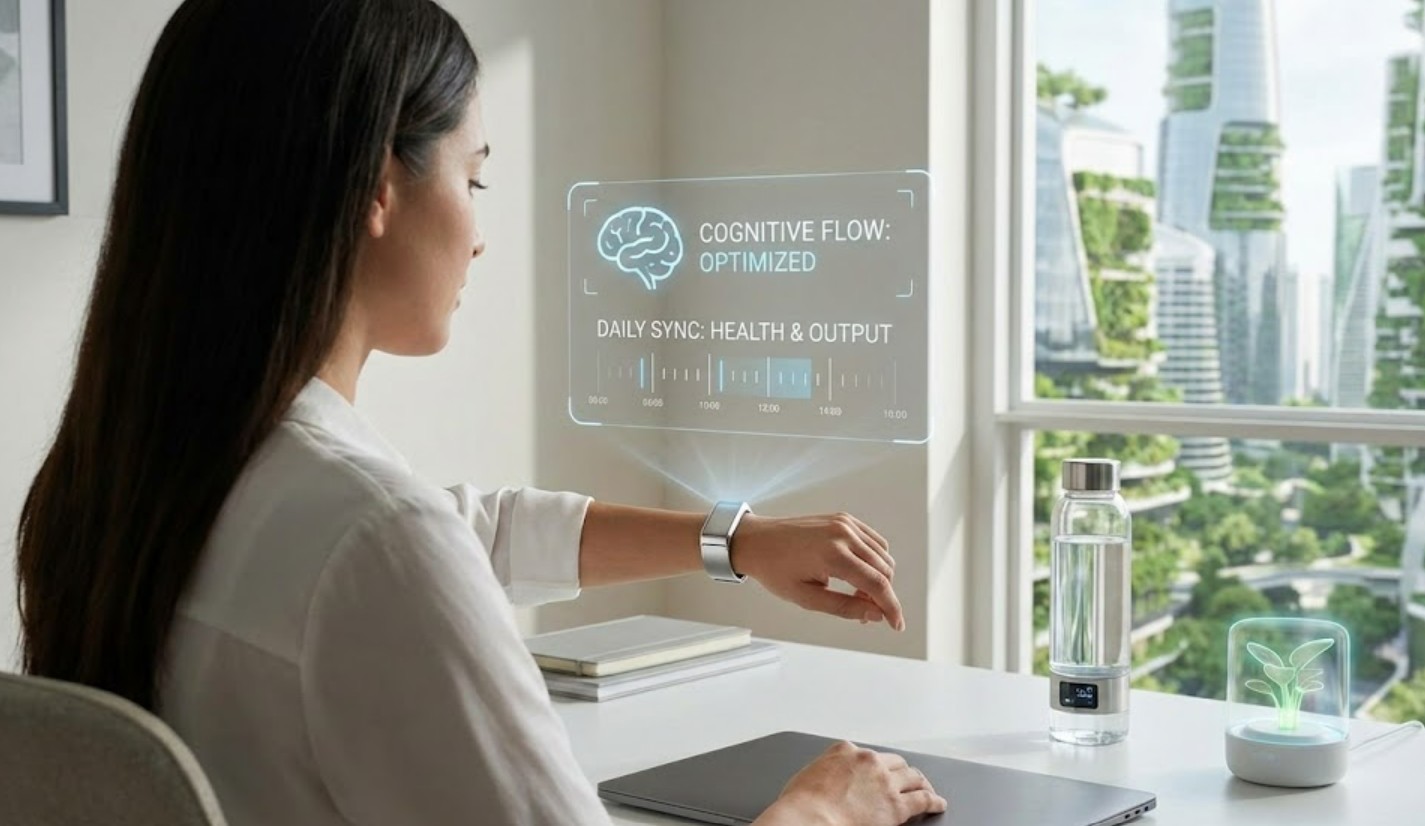
Focus State Prediction: By correlating ambient data (light, temperature, noise) with your sleep quality and heart rate variability (HRV), the HDT can predict your peak cognitive windows. It will alert you when you are most likely to enter a flow state for complex tasks and suggest scheduling collaboration or low-intensity tasks during predictable slumps.
-
Burnout Prevention: The twin can monitor physiological signs of chronic stress, such as sustained elevated resting heart rate or deteriorating sleep quality. Instead of waiting for a breakdown, the HDT proactively recommends necessary breaks, deep work boundaries, or even suggests a specific mental health check-in, acting as a personal, data-driven chief wellness officer.
-
The “What If” Career Test: In a more futuristic application, a high-fidelity HDT could simulate the impact of major life choices—like moving to a new city or changing careers—by modeling the stress, energy expenditure, and cognitive load associated with the change, helping to guide major personal decisions.
The Ethical Challenge: Data, Privacy, and Control
The power of the Human Digital Twin is intrinsically linked to the massive amount of sensitive data it consumes. This raises critical ethical questions that must be addressed for mainstream adoption:
| Ethical Concern | Challenge to Address |
| Data Ownership | Who owns the HDT—the individual, the healthcare provider, or the company that built the platform? Individuals must retain ultimate control. |
| Privacy & Security | HDT data is the most sensitive data imaginable. It requires military-grade encryption and strict regulatory oversight to prevent breaches, misuse by insurance companies, or employers. |
| Algorithmic Bias | If an HDT is trained on data predominantly from one demographic, its predictions may be inaccurate or harmful for others, potentially exacerbating existing health inequities. |
| Autonomy Erosion | Will individuals become overly dependent on the twin’s recommendations, diminishing human intuition and agency in personal decision-making? |
The successful rollout of the Human Digital Twin depends entirely on developing robust, transparent Ethical AI Frameworks that put the individual patient at the center of the data loop.
Conclusion: Your Most Valuable Investment
The Human Digital Twin represents the zenith of personalized technology. It transforms the human body from a reactive mystery into an observable, optimized system. While the technology is complex, the promise is simple: a future of proactive health, sustained peak performance, and data-driven longevity. It is the ultimate personal investment—an accurate, predictive mirror of your own potential.
About the Author