A New Cyber Risk Era Has Begun
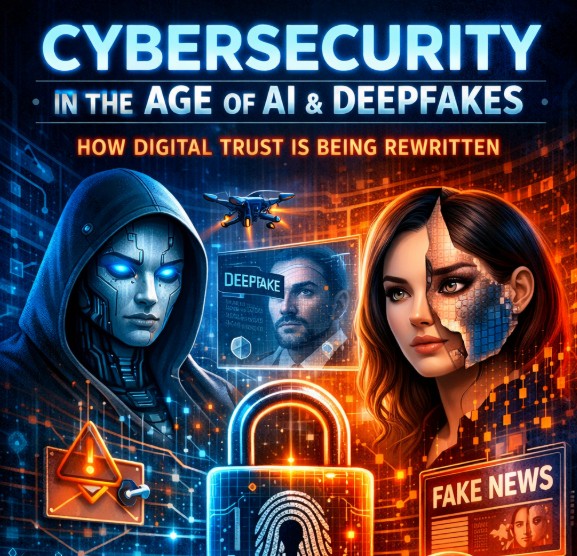
Cybersecurity has entered its most complex stage however. Manufactured Insights (AI) and deepfake innovation are no longer exploratory tools—they are presently capable weapons in the hands of cybercriminals. From AI-generated phishing emails to hyper-realistic deepfake recordings imitating CEOs and lawmakers, computerized dangers are advancing quicker than conventional security frameworks can handle.
As businesses, governments, and people progressively depend on computerized stages, cybersecurity in the age of AI and deepfakes has gotten to be a worldwide need. This article investigates how AI-driven dangers work, why deepfakes are so perilous, and how organizations can protect themselves in this quickly changing advanced battlefield.
What Are AI-Powered Cyber Attacks?
AI-powered cyberattacks utilize machine learning calculations to robotize, optimize, and personalize assaults at scale. Not at all like conventional hacking strategies, AI permits assailants to adjust in genuine time, making dangers harder to identify and stop.
Key Cases of AI-Driven Cyber Threats
- Smart Phishing Assaults: AI analyzes social media profiles, emails, and online behavior to create profoundly personalized phishing messages.
- Automated Malware: AI-powered malware can adjust its code to sidestep antivirus detection.
- Password Breaking: Machine learning speeds up brute-force and credential-stuffing attacks.
- Voice Cloning Tricks: AI-generated voices mimic officials to authorize false transactions.
These assaults significantly increment victory rates, costing companies billions in budgetary misfortunes each year.
Deepfakes: The Extreme Weapon Against Advanced Trust
Deepfakes are AI-generated pictures, recordings, or sound that convincingly mirror genuine individuals. What once required Hollywood-level assets can presently be made utilizing unreservedly accessible AI tools.
Why Deepfakes Are a Genuine Cybersecurity Risk
Deepfakes don’t fair take money—they annihilate trust.
- CEO Extortion: Hoodlums utilize deepfake video or voice to imitate officials amid video calls.
- Political Control: Fake addresses and recordings impact decisions and open opinion.
- Financial Showcase Control: Fake news recordings can trigger stock cost crashes.
- Identity Burglary: Deepfake selfies bypass biometric security systems.
As deepfakes ended up more reasonable, confirming what’s genuine online gets to be progressively difficult.
Why Conventional Cybersecurity Is Failing
Most conventional cybersecurity frameworks depend on predefined rules and known assault designs. AI-based dangers break these models.
Major Shortcomings in Bequest Security Systems
- Signature-Based Location can’t recognize unused AI-generated malware.
- Human Confirmation Frameworks fall flat against deepfake sound and video.
- Static Firewalls battle with versatile AI-driven attacks.
- Slow Reaction Times permit AI dangers to spread rapidly.
This bungle between advanced dangers and obsolete protections makes unsafe security gaps.
How AI Is Moreover Fortifying Cybersecurity
While AI empowers modern cyber dangers, it is too the most grounded defense against them. Present day cybersecurity arrangements presently depend on AI to battle AI.
AI-Powered Cyber Defense Technologies
- Behavioral Investigation: AI recognizes bizarre client behavior in genuine time.
- Deepfake Discovery Apparatuses: Calculations analyze facial developments, squinting designs, and sound inconsistencies.
- Predictive Risk Insights: AI figures assaults some time recently they happen.
- Automated Occurrence Reaction: AI segregates compromised frameworks inside seconds.
Organizations utilizing AI-based security apparatuses involvement essentially lower breach location times.
The Human Figure: The Weakest Interface in Cybersecurity
Despite progressed innovation, people stay the most defenseless passage point for cyberattacks.
Common Human Blunders Misused by AI Attacks
- Clicking AI-crafted phishing emails
- Trusting deepfake video calls
- Reusing frail passwords
- Oversharing on social media
Best Hones for People and Employees
- Verify demands utilizing numerous communication channels
- Never believe voice or video alone for budgetary decisions
- Enable multi-factor verification (MFA)
- Attend standard cybersecurity mindfulness training
Educated clients are the to begin with line of defense in the AI era.
Cybersecurity Controls in the Age of AI
Governments around the world are presenting modern laws to combat AI-driven cybercrime.
Emerging Cybersecurity and AI Regulations
- AI administration systems centering on capable AI use
- Data security laws focusing on deepfake misuse
- Mandatory breach revelation rules
- Stronger computerized personality confirmation standards
Organizations coming up short to comply hazard overwhelming fines and reputational damage.
Future Patterns: What Cybersecurity Will See Like by 2030
The cybersecurity scene will proceed advancing nearby AI technology.
Key Cybersecurity Patterns to Watch
- Zero-trust security architectures
- AI-powered personality verification
- Blockchain-based computerized personality systems
- Real-time deepfake verification tools
- Quantum-resistant encryption
Digital believe will gotten to be a competitive advantage for businesses.
Conclusion: Securing Believe in a Manufactured World
Cybersecurity in the age of AI and deepfakes is no longer fair an IT issue—it is a societal challenge. As computerized encounters ended up progressively engineered, believe gets to be the most important resource online.
Organizations that contribute in AI-driven cybersecurity, representative instruction, and solid computerized personality frameworks will not as it were survive but flourish in this modern time. Those who come up short to adjust hazard getting to be the following feature in a world where reality itself can be produced.
About the Author