Presentation: The Internet’s Greatest Move Since Web 2.0
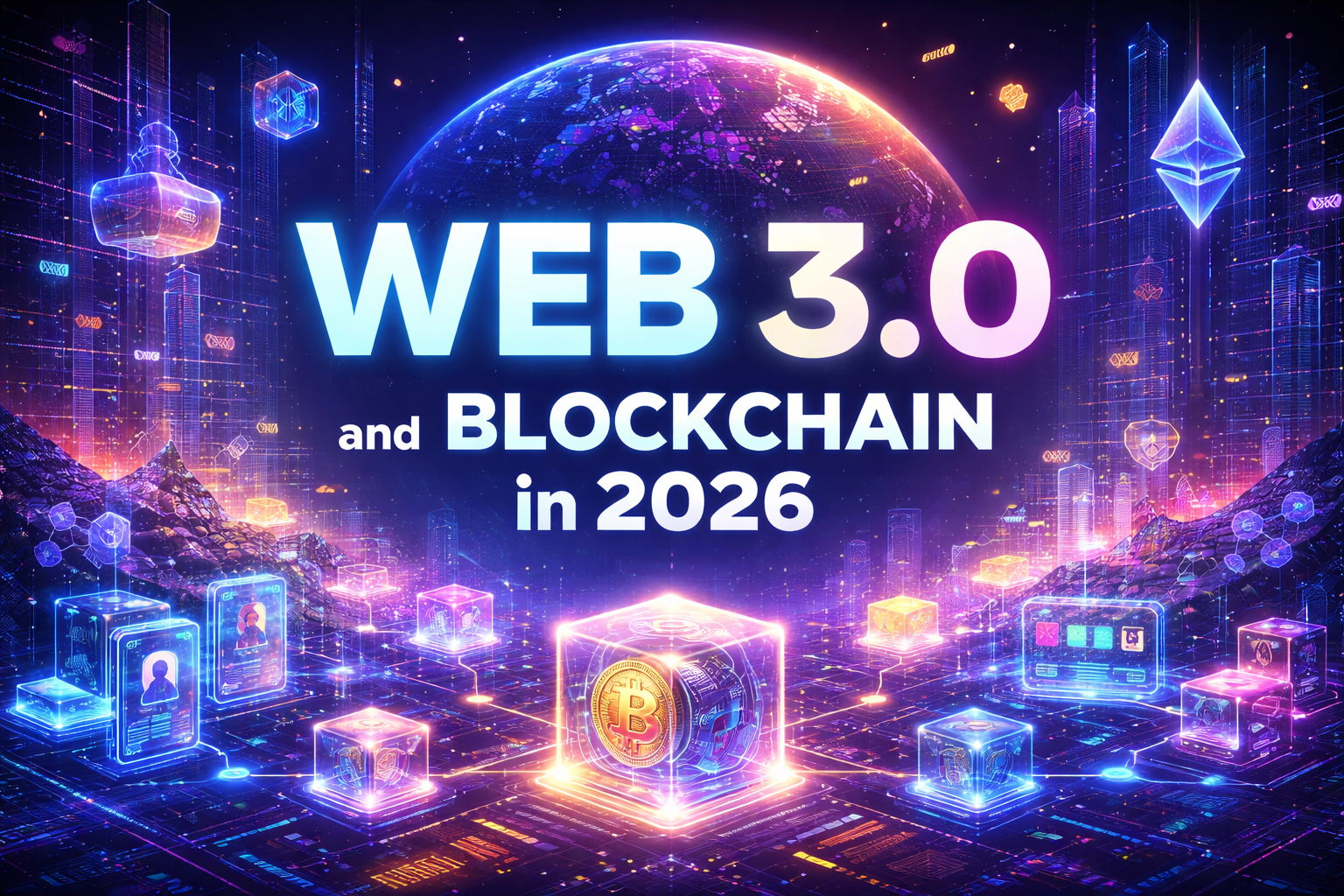
By 2026, Web 3.0 is no longer a buzzword—it has ended up the establishment of a unused computerized economy. Fueled by blockchain innovation, Web 3.0 is changing how clients associated with the web, moving control from centralized organizations to people. This advancement is reclassifying advanced possession, online security, back, substance creation, and indeed governance.
As governments, endeavors, and makers progressively receive decentralized frameworks, Web 3.0 speaks to a basic alter in how the web works—one that has enormous suggestions for security, straightforwardness, and riches creation.
What Is Web 3.0? A Speedy Refresher
Web 3.0 alludes to the decentralized web, where applications run on blockchains instep of centralized servers. Not at all like Web 2.0—dominated by Huge Tech platforms—Web 3.0 permits clients to:
- Own their advanced assets
- Control their individual data
- Transact without intermediaries
- Participate in decentralized governance
Blockchain acts as the believe layer, empowering peer-to-peer interaction without depending on centralized authorities.
Blockchain in 2026: Quicker, Greener, and Scalable
In 2026, blockchain innovation has developed altogether. Systems like Ethereum presently work with energy-efficient agreement components, higher exchange throughput, and near-instant settlement times. Layer-2 scaling arrangements and cross-chain interoperability have evacuated numerous of the bottlenecks that once restricted adoption.
Meanwhile, Bitcoin remains the spine of decentralized fund as a advanced store of esteem, progressively held by educate, governments, and paramount funds.
Key blockchain progressions in 2026 include:
- Ultra-low exchange fees
- Institutional-grade security
- Multi-chain ecosystems
- Regulatory-friendly compliance layers
Decentralized Back (DeFi) Goes Mainstream
DeFi in 2026 has moved past early adopters. Clients presently get to managing an account services—lending, borrowing, protections, and resource trading—without conventional banks. Shrewd contracts execute exchanges naturally, lessening costs and dispensing with middlemen.
DeFi stages presently equal conventional monetary teach in exchange volume, whereas offering:
- Global access
- Transparent intrigued rates
- 24/7 availability
- Full resource guardianship for users
For rising economies, DeFi is getting to be a effective device for budgetary inclusion.
Digital Possession: NFTs Past Craftsmanship and Collectibles
Non-Fungible Tokens (NFTs) have advanced distant past profile pictures. In 2026, NFTs speak to genuine advanced possession over different industries:
- Real bequest deeds
- Music royalties
- Gaming assets
- Digital identities
- Intellectual property rights
Marketplaces like OpenSea presently back enterprise-grade NFT framework, empowering makers to win ceaseless sovereignties whereas keeping up control over their work.
Digital possession guarantees that users—not platforms—retain value.
Decentralized Personality (DID) and Information Privacy
One of the most transformative perspectives of Web 3.0 is decentralized personality. Instep of logging in through centralized suppliers, clients confirm themselves utilizing blockchain-based accreditations put away in secure wallets like MetaMask.
Benefits of decentralized personality in 2026 include:
- Reduced character theft
- No centralized information breaches
- User-controlled permissions
- Privacy-first authentication
This show adjusts flawlessly with worldwide information security controls and developing protection awareness.
Decentralized Capacity and Computing
Web 3.0 is moreover changing how information is put away. Decentralized capacity systems such as IPFS kill dependence on centralized cloud providers.
Advantages include:
- Censorship resistance
- Higher uptime
- Reduced information monopolies
- Cost-efficient storage
Combined with decentralized computing, these advances are fueling Web 3.0 social systems, media stages, and venture applications.
DAOs: The Future of Advanced Governance
Decentralized Independent Organizations (DAOs) are reclassifying how communities and companies work. In 2026, DAOs oversee billions of dollars in resources, oversee stages, and finance advancement through straightforward, token-based voting systems.
DAOs offer:
- Borderless collaboration
- Transparent decision-making
- Community-driven governance
- Automated treasury management
They are progressively utilized for new businesses, venture stores, and indeed nearby administration experiments.
Challenges Confronting Web 3.0 in 2026
Despite quick development, Web 3.0 still faces challenges:
- Regulatory instability in a few regions
- User encounter complexity
- Smart contract vulnerabilities
- Education and selection gaps
However, moved forward interfacing, more grounded security reviews, and clearer directions are relentlessly tending to these issues.
Why Web 3.0 Things for Businesses and Investors
For businesses, Web 3.0 opens modern income models through tokenization, decentralized stages, and coordinate client proprietorship. For speculators, it speaks to one of the most noteworthy mechanical speculation openings since the early internet.
High-growth regions in 2026 include:
- Web 3.0 infrastructure
- Blockchain security
- Tokenized assets
- AI-powered savvy contracts
The Street Ahead: A User-Owned Internet
Web 3.0 and blockchain in 2026 check the starting of a user-owned internet—one that prioritizes straightforwardness, decency, and advanced sway. As appropriation quickens, decentralized innovations will reshape fund, media, personality, and administration on a worldwide scale.
About the Author