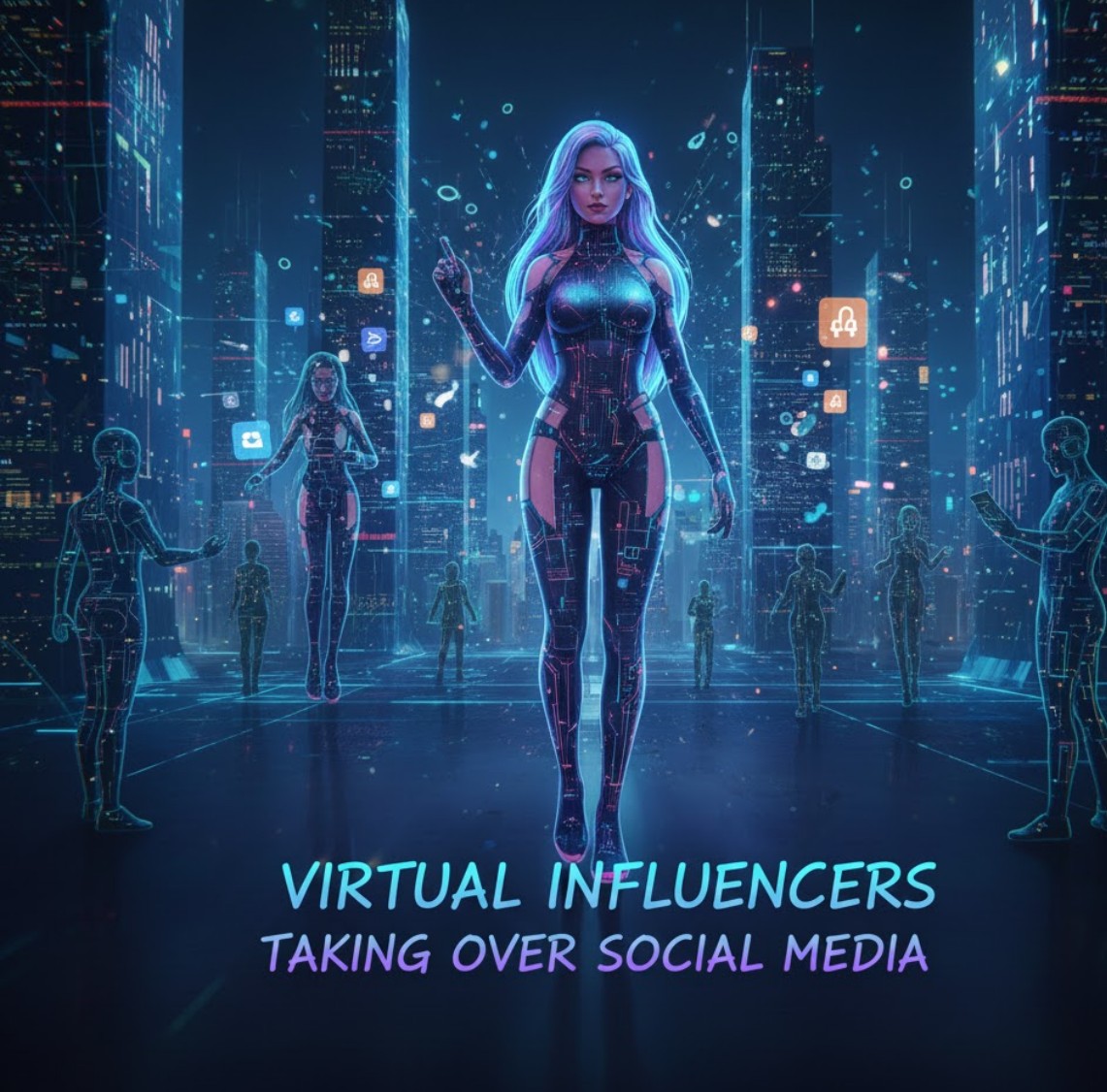
The landscape of social media is in the midst of a profound transformation, one where the faces smiling back from our screens are increasingly not human, but meticulously crafted digital personas. These AI celebrities, or virtual influencers, are sophisticated computer-generated characters with their own distinct personalities, backstories, and aesthetics, capable of commanding millions of followers and lucrative brand deals.
What began as a technological novelty has rapidly matured into a formidable marketing force, signaling a new era where the concept of a “celebrity” is being radically redefined. This revolution is not just about hyper-realistic graphics; it’s about the fundamental shift in how influence is created, controlled, and consumed in the digital age.
Meet the Digital Elite: The New Icons of Social Media
The rise of AI celebrities is best understood through the success stories of a few pioneering figures who have crossed the threshold from digital art project to global superstar. These virtual icons are setting trends, collaborating with A-list brands, and demonstrating the immense, scalable power of a synthetic persona.
One of the most recognizable figures is Lil Miquela (@lilmiquela). Debuting in 2016, this 21-year-old (forever) robot from Los Angeles has amassed over 2.5 million Instagram followers and 3.4 million on TikTok. Her carefully crafted persona—a model, singer, and social activist—has led to major collaborations with fashion houses like Prada, Dior, and Calvin Klein. She embodies the quintessential virtual influencer, maintaining a consistent, edgy aesthetic that brands can rely on without the unpredictability of a human personality.
Another massive success is Lu do Magalu (@magazineluiza), the brand ambassador for the Brazilian retail giant Magazine Luiza. With over 7 million Instagram and 7.3 million TikTok followers, she is often cited as the most-followed virtual influencer globally. Lu’s role is primarily as a friendly, tech-savvy product reviewer and guide, demonstrating how a virtual persona can act as a relatable, trusted face for a multinational brand.
Other notable figures include:
-
Imma (@imma.gram): A hyper-realistic Japanese model with a distinct pink bob, known for her seamless blending into real-world fashion shoots.
-
Noonoouri: A high-fashion, doll-like 3D character who has partnered with luxury brands like Dior, Versace, and Valentino, and advocates for social causes like sustainability.
-
Aitana López: A Spanish AI-generated model created to offer brands a cost-effective, easily controllable alternative to human models, designed with flawless consistency.
These digital stars prove that audiences are willing to follow, engage, and even trust a non-human entity, provided the content is compelling, the personality is consistent, and the narrative is captivating.
The Marketing Revolution: Why Brands Choose AI
The appeal of virtual influencers to brands and marketers goes beyond mere novelty; it presents a strategic business advantage that directly addresses the pain points of traditional influencer marketing. The core difference lies in control, consistency, and cost-effectiveness.
Unmatched Control and Consistency
Human influencers are unpredictable. They can have personal scandals, change their aesthetic, clash with a brand’s vision, or simply experience burnout. AI celebrities, by contrast, are crisis-proof and 100% on-brand. Creators have complete control over their appearance, voice, personality, and—most importantly—their messaging. This level of consistency is invaluable, allowing brands to maintain a perfect, untainted image across long-term campaigns.
Scalability and Availability
A virtual influencer never sleeps, never takes a vacation, and is not constrained by geography. They can generate content 24/7 and be instantly adapted for different markets. A single digital asset can be rendered in multiple languages or culturally relevant settings simultaneously, offering a global reach that is incredibly difficult and expensive to achieve with human talent. Furthermore, while the initial creation cost for a sophisticated AI celebrity can be high, the long-term operational costs often prove to be more cost-efficient than paying escalating rates, travel, and logistics for top-tier human talent.
Data-Driven Personalization
AI is a powerful tool for analyzing audience data—likes, shares, comments, and engagement patterns. Virtual influencers can leverage this information to deliver hyper-personalized content that is optimized for specific consumer preferences. This data-driven approach allows brands to fine-tune their messaging in real-time and achieve significantly higher engagement rates than a one-size-fits-all campaign. Some studies have suggested that virtual influencers can generate up to three times the engagement of their human counterparts.
The Ethical Minefield: Concerns and Controversies
For all their advantages, the rise of AI celebrities has opened a complicated ethical dialogue about authenticity, transparency, and social impact.
The Authenticity Paradox
The most pressing question is the issue of authenticity. Influence, traditionally, is rooted in shared human experience and genuine relatability. A virtual influencer, by definition, has no real-life experiences, emotions, or consequences. This can lead to a sense of deception, particularly for younger, more impressionable audiences who may not immediately grasp that they are engaging with a fictional character. While some creators intentionally disclose the AI nature, the lack of a standardized regulatory framework around disclosure and transparency remains a major concern. The US Federal Trade Commission (FTC) has had to consider expanding its definition of “endorsers” to address this new digital reality.
Unrealistic Beauty Standards and Representation
Many of the most popular virtual influencers are designed to embody an unattainable level of physical perfection: flawless skin, perfect symmetry, and perpetually youthful looks. This trend risks exacerbating existing body image issues and propagating harmful beauty standards, especially among teenagers who already face immense pressure from social media.
Furthermore, issues of cultural appropriation have surfaced. For example, the creation of Shudu Gram, a hyper-realistic digital supermodel of Black descent, by a white male photographer sparked controversy over who has the right to create and profit from the depiction of marginalized identities. The debate centers on ensuring that virtual characters reflect genuine diversity and are not simply perpetuating stereotypes for commercial gain.
Job Displacement and Accountability
The ease and affordability of AI-generated content raise a real fear of job displacement for human models, photographers, and micro-influencers. As the technology becomes more accessible, brands may increasingly pivot to their own in-house AI personalities, reducing opportunities for human talent. Finally, the question of accountability is critical: if a virtual influencer spreads misinformation, endorses a faulty product, or says something offensive, who is held legally and morally responsible—the character, the brand, or the creator agency?
The Future is Autonomous: Beyond the Avatar
The current generation of virtual influencers operates with limited autonomy, requiring human teams to generate their scripts, images, and responses. However, the future is rapidly trending toward truly autonomous AI characters.
As machine learning, deep learning, and natural language processing advance, the next generation of AI celebrities will likely feature:
-
Agent-Level Reasoning: The ability to “think,” maintain long-term memory, and evolve their personality traits based on real-time audience feedback and interactions.
-
Real-Time Interactivity: Integration with real-time rendering capabilities, allowing them to appear in live streams, host shows, and engage in genuine, continuous conversation with followers across different time zones.
-
New Digital Roles: They may transcend the “influencer” label to become digital co-hosts, virtual salespeople, automated customer support avatars, or even digital actors with their own persistent, evolving narrative arcs.
This technology is not destined to replace human creators entirely, but rather to create a new, distinct layer in the content ecosystem. AI celebrities offer a powerful new medium for storytelling and marketing—a fully controllable digital identity that can be scaled globally. The next challenge is ensuring that this powerful technology is developed within a robust framework of transparency, ethical responsibility, and public interest, ensuring that the rise of the machine does not come at the expense of human authenticity and well-being. The blurred line between fantasy and reality on social media is here to stay, and understanding the digital celebrity is key to navigating the future of our online world.
About the Author