The digital world is on the cusp of its next great transformation. For over a decade, our lives have been organized around the mobile app model: siloed, single-purpose applications requiring constant human interaction, navigation, and context-switching. We open one app for email, another for banking, a third for booking travel, and a fourth for managing our calendar. This fragmented existence, dubbed “app fatigue,” is rapidly reaching its breaking point.
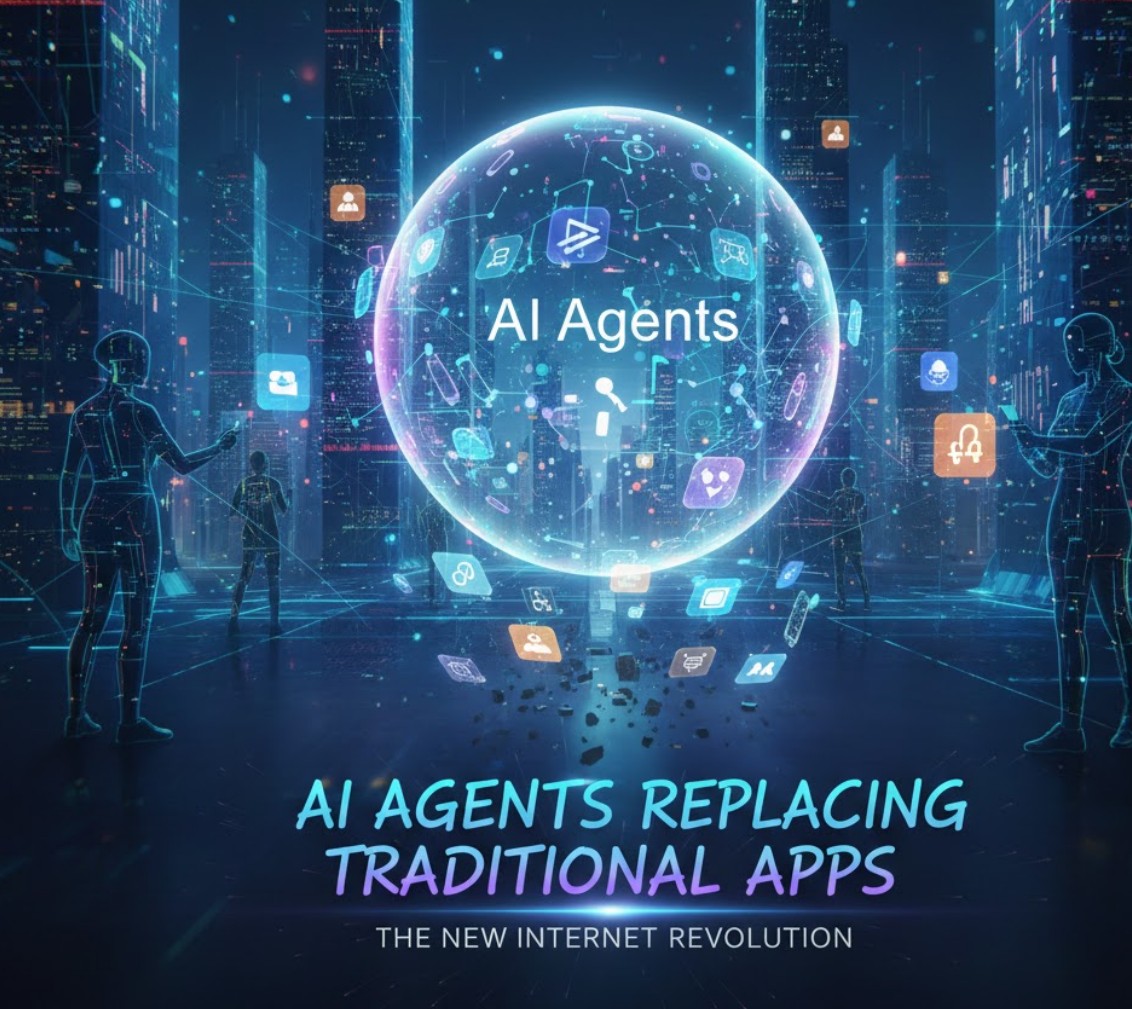
Enter the AI Agent, a new paradigm powered by breakthroughs in Large Language Models (LLMs) and advanced planning frameworks. These agents are not merely smarter chatbots; they are autonomous, goal-driven software entities capable of performing complex, multi-step tasks across systems with minimal human input. They represent a fundamental shift from a user-interface-centric internet to an agent-centric web, initiating an era where users delegate tasks, not merely operate software. This revolution promises to replace many traditional apps, not through competition, but through obsolescence.
The Anatomy of the AI Agent
At their core, AI agents differ from traditional software and even early AI assistants like basic chatbots in a critical way: they operate on a Sense-Plan-Act-Learn loop.
-
Sense (Perception): They ingest a request, usually in natural language (“Book me a trip to London for the conference next month, keep it under $2,000, and include a hotel near the venue”). They gather context from various sources—your calendar, budget tool, email—via APIs and connectors.
-
Plan (Reasoning): The LLM core breaks the complex goal into a sequence of actionable sub-tasks (e.g., “Find flight options,” “Check hotel availability,” “Compare prices,” “Draft itinerary,” “Book final choice”). This is a dynamic, reasoned plan, not a hardcoded workflow.
-
Act (Tool Use): The agent executes the plan by interacting with external tools, databases, and other systems (e.g., calling the flight API, accessing the hotel booking engine). This is where the agent moves from conversation to autonomous action.
-
Learn (Adaptability): It stores the outcome, success or failure, and user feedback in its memory, making it smarter for the next similar task. This continuous learning capability ensures the agent gets progressively better and more personalized over time.
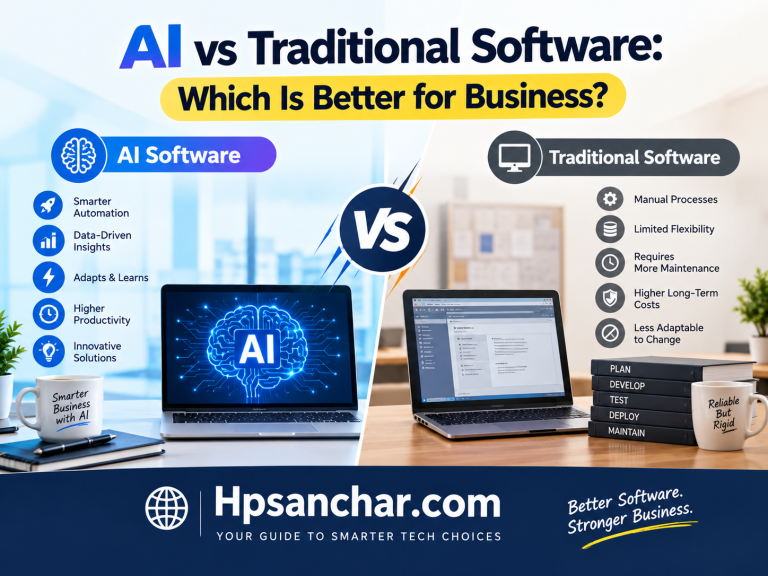
Traditional apps are static and rule-bound, requiring users to manage the workflow. AI agents are dynamic, goal-driven, and adaptive, eliminating the need for the user to navigate the friction of multiple platforms.
The Collapse of the Siloed App Ecosystem
The current mobile and web application environment is defined by its silos. Every service—from personal finance to social media—lives in its own dedicated interface, demanding the user’s fragmented attention.
The AI Agent model shatters these silos by acting as an intelligent, cross-platform intermediary. Instead of subscribing to and operating ten separate Software-as-a-Service (SaaS) tools, businesses and consumers will deploy one or more specialized AI agents to manage entire functional areas.
-
For the User: Planning a complex multi-step task, like the aforementioned business trip, no longer requires juggling five different apps. A single, goal-oriented instruction to an agent is sufficient. The agent handles the necessary API calls, data comparison, scheduling, and transaction execution in the background, only returning to the user for final approval. This shift replaces the interface with the intent.
-
For the Enterprise: Bloated, monolithic business applications are giving way to agent-first architecture. Instead of complex ERP or CRM interfaces, an enterprise agent can receive a command like, “Onboard the new vendor, initiate the contract, and schedule their first payment run.” The agent autonomously executes the workflow across multiple internal and external systems—HR, finance, legal—without a human clicking a single form or button.
This transition means that many single-purpose applications will lose their primary value proposition: the function of the interface. When the most efficient way to achieve a goal is through delegation to an autonomous agent, the need to download, log in to, and manually navigate a static app evaporates.
Hyper-Personalization and Proactivity
Traditional applications offer generic experiences with limited customization. If you use a music streaming app, it recommends songs based on your listening history, but it stops there.
AI agents take hyper-personalization to an unprecedented level because they possess deep memory and context.
-
Adaptive UX: An agent doesn’t just recommend a product; an e-commerce agent can dynamically re-arrange the entire storefront based on your current mission, shopping style, and even time of day, creating an interface that feels built just for you.
-
Proactive Action: Unlike apps that wait for user input, an agent works ahead. A financial agent might not wait for you to log in to check for late payments; it monitors your accounts, automatically drafts a polite inquiry to an overdue client, and prepares a transfer to cover an unexpected expense, flagging the actions for your review. This shift from reactive tools to proactive partners defines the new digital experience.
The Rise of the “Agentic Web” and New Infrastructure
This revolution is not just about a new type of software; it demands a fundamental redesign of the internet itself. The future “Agentic Web” is being built not just for human eyeballs, but for machine-to-machine interaction.
Key infrastructural shifts are emerging:
-
Agent Identity and Interoperability: New protocols, like the proposed Agent-to-Agent (A2A) protocol, are being developed to allow agents from different vendors and systems to communicate, negotiate, and collaborate securely.
-
Agent Interface Optimization (AIO): Websites are moving beyond Search Engine Optimization (SEO) to AIO, prioritizing structured data, semantic metadata, and accessible APIs. A site’s value will increasingly be measured not by human clicks, but by its ability to empower autonomous systems to act on its offerings.
-
Agent Payments Protocol: The ability for agents to conduct verifiable, secure transactions on behalf of the user is essential, requiring new cryptographic and auditing methods to ensure trust and accountability in automated commerce.
Challenges and the Human Role
As with any revolution, challenges exist. Concerns around security, privacy, and accountability are paramount. Giving an autonomous entity access to your financial accounts and confidential data requires robust security and clear audit trails. Furthermore, the issue of algorithmic bias is magnified when autonomous agents are making critical, real-world decisions.
However, the AI agent revolution will not entirely displace human work, but rather redefine it. The human role shifts from being the operator of fragmented apps to the designer, orchestrator, and overseer of powerful, specialized agents. The focus of human effort will move from mundane, repetitive tasks to strategic planning, creative problem-solving, and managing the ethical and strategic deployment of their digital workforce.
Conclusion
The fragmented app economy served us well, but its time is ending. The arrival of autonomous AI agents marks the end of the user interface as the primary interaction point and the beginning of the Intention Economy. Users will no longer manage software; they will delegate goals.
The internet is transforming from a place where we go to click, type, and navigate, into a dynamic, personalized ecosystem where intelligent agents work tirelessly in the background, fulfilling our complex, multi-step goals. This shift to an agent-first paradigm is not a minor update—it is the next great internet revolution, poised to unlock unparalleled efficiency, personalization, and productivity. The apps we rely on today may soon become little more than data endpoints for the tireless agents that manage our lives.
About the Author