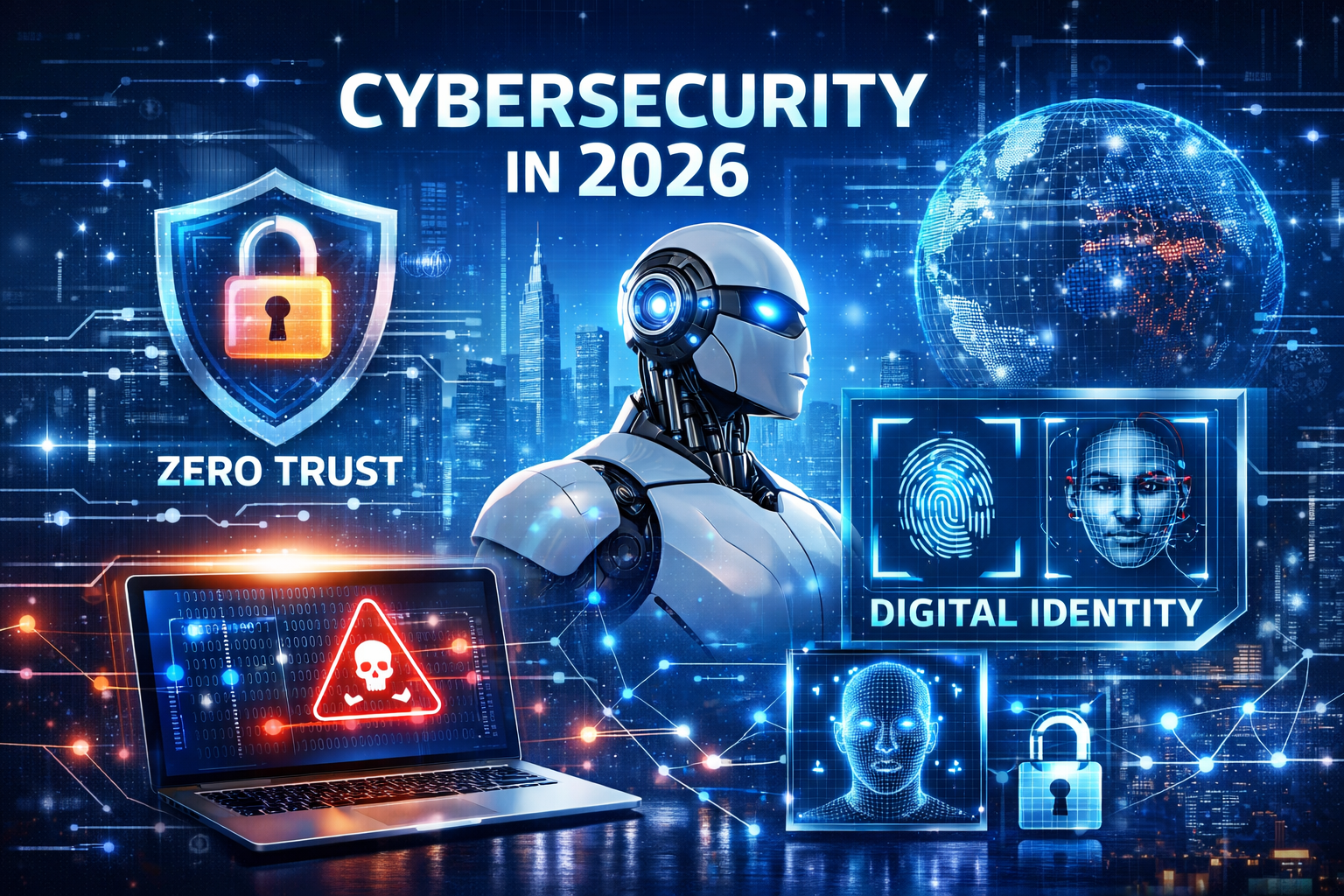
Presentation: The Cybersecurity Turning Point of 2026
Cybersecurity in 2026 has entered a definitive modern time. As fake insights, cloud computing, and advanced administrations gotten to be profoundly implanted in ordinary life, cyber dangers have developed more astute, quicker, and more damaging. Conventional perimeter-based security models are no longer adequate. In reaction, organizations around the world are embracing Zero-Trust Engineering, AI-powered cyber defense, and next-generation computerized personality frameworks to ensure clients, information, and infrastructure.
Governments, undertakings, and people presently recognize cybersecurity not as an IT issue, but as a center column of computerized believe and financial steadiness. This article investigates how these three strengths are reclassifying online safety—and why 2026 is a point of interest year for cyber resilience.
The Zero-Trust Transformation: “Never Believe, Continuously Verify”
Zero-Trust is no longer a buzzword—it is the spine of advanced cybersecurity techniques in 2026. Not at all like conventional models that accept inside systems are secure, Zero-Trust treats each client, gadget, and application as possibly compromised.
Key Standards of Zero-Trust Security
- Continuous character verification
- Least-privilege access
- Micro-segmentation of networks
- Real-time checking and analytics
Major innovation pioneers like Microsoft and Google have inserted Zero-Trust systems specifically into their cloud and venture stages, quickening worldwide adoption.
Why Zero-Trust Things in 2026
With inaccessible work, IoT gadgets, and cloud administrations ruling commerce operations, assailants no longer require to breach a firewall—they target accreditations. Zero-Trust minimizes harm by guaranteeing that indeed if aggressors pick up get to, their development is firmly restricted.
SEO catchphrases: zero-trust security, zero-trust design 2026, endeavor cybersecurity
AI Defense Frameworks: Battling Machines with Machines
Cybercrime in 2026 is to a great extent robotized. Programmers presently utilize AI to create phishing assaults, split passwords, and abuse vulnerabilities at machine speed. To counter this, protectors are conveying AI-driven cybersecurity stages competent of learning, anticipating, and reacting autonomously.
How AI Is Changing Cyber Defense
AI-powered security frameworks can:
- Detect inconsistencies in genuine time
- Predict assault designs some time recently execution
- Automate occurrence response
- Reduce untrue positives dramatically
Companies such as IBM and Palo Alto Systems lead the AI defense showcase, advertising stages that coordinated machine learning with risk intelligence.
From Receptive to Prescient Security
In 2026, cybersecurity is no longer responsive. AI empowers prescient defense, recognizing suspicious behavior some time recently a breach happens. This move essentially brings down reaction time and budgetary misfortunes, making AI one of the highest-ROI speculations in advanced IT security.
Digital Character: The Modern Edge of Online Safety
Passwords are quickly getting to be out of date. In 2026, computerized personality has risen as the unused security border, driven by biometrics, decentralized character (DID), and blockchain-based authentication.
The Rise of Passwordless Security
Modern personality frameworks depend on:
- Biometric verification (confront, unique finger impression, voice)
- Hardware security keys
- Behavioral biometrics
- Multi-factor verification (MFA)
Organizations such as Okta and Auth0 are forming identity-first security models that decrease credential burglary and phishing attacks.
Decentralized Character and Client Control
Decentralized computerized personality gives clients proprietorship of their qualifications, minimizing centralized information breaches. Governments and budgetary educate are progressively investigating blockchain-secured IDs to upgrade security and trust.
The Meeting: Zero-Trust + AI + Computerized Identity
The genuine control of cybersecurity in 2026 lies in the joining of these innovations. Zero-Trust systems depend on solid computerized personality, whereas AI ceaselessly assesses believe levels and get to risks.
Benefits of an Coordinates Security Model
- Reduced assault surface
- Faster breach containment
- Improved compliance with worldwide regulations
- Enhanced client encounter without relinquishing security
This bound together approach empowers organizations to scale safely whereas keeping up deftness in a quickly advancing danger landscape.
Cybersecurity Directions and Compliance in 2026
Regulatory weight is moreover forming cybersecurity speculations. Governments around the world have reinforced information security and cyber strength laws, pushing companies toward proactive security strategies.
Key patterns include:
- Mandatory breach reporting
- AI administration frameworks
- Stricter personality confirmation standards
- Heavy punishments for negligence
Compliance is no longer optional—it is a competitive advantage that builds customer believe and brand reputation.
Cybersecurity Challenges Ahead
Despite headways, challenges remain:
- AI-powered cybercrime escalation
- Privacy concerns in biometric systems
- Skills deficiency in cybersecurity professionals
- Integration complexity over bequest systems
Addressing these issues requires progressing advancement, instruction, and collaboration between the open and private sectors.
The Future of Online Security Past 2026
Looking ahead, cybersecurity will gotten to be progressively independent, identity-centric, and prescient. Organizations that come up short to adjust hazard not as it were money related misfortune but lasting harm to believe.
Conclusion
Cybersecurity in 2026 marks a fundamental shift in how online safety is defined and delivered. Zero-Trust architecture eliminates blind trust, AI defense systems outpace modern threats, and digital identity redefines authentication and privacy.
About the Author